1.26.2022

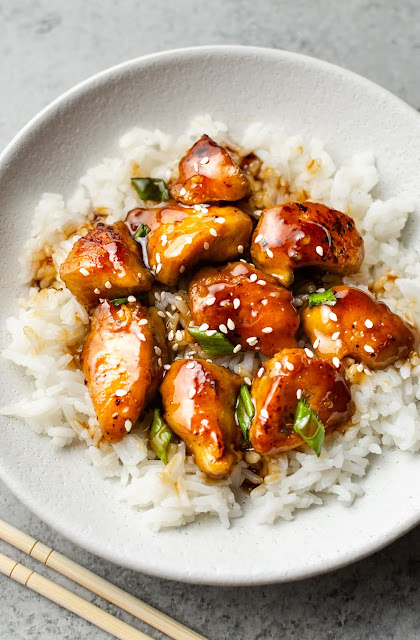
Teriyaki chicken


1 1/4 lbs. boneless skinless chicken breasts, diced into 1-inch cubes
1 Tbsp sesame seed oil
1/4 cup soy sauce
1/4 cup water
2 Tbsp honey
1 1/2 Tbsp packed light brown sugar
1 Tbsp rice vinegar
1/4 tsp toasted sesame oil  (for drizzling) 
2 tsp peeled and minced fresh ginger
2 tsp peeled and minced fresh garlic (2 cloves)
2 tsp cornstarch
Sesame seeds and chopped green onions, for serving (optional)


  • 1. Heat sesame seed oil in a 12-inch non-stick skillet over medium-high heat.
  • 2. Add in chicken and let brown on bottom about 3 - 4 minutes then flip and continue to cook ,about 3 extra minutes.
  • 3. While chicken is cooking, in a small mixing bowl whisk together soy sauce, water, honey, brown sugar, rice vinegar, sesame oil, ginger, garlic and cornstarch.
  • Stir the sauce in with the cooked chicken and continue to cook and toss until sauce has thickened, about 30 - 60 seconds longer. 
  • 4. Serve warm garnished with green onions and sesame seeds if desired.


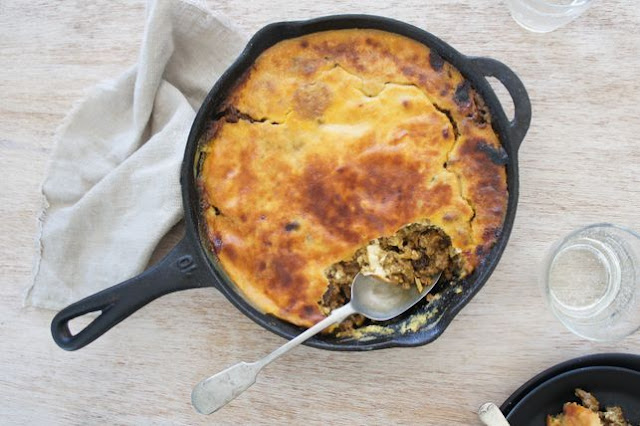
Babotie


2 slices white bread
1 cup milk
2 tbsp butter
1 cup onion finely chopped
1 garlic clove chopped
1 granny smith apple cored diced
1 kg lamb or beef mince
1/4 cup slivered almonds
3 tbsp lemon juice
2 tbsp chutney
2 tbsp curry powder
1 tbsp light brown sugar
1 tsp salt
1/2 tsp pepper
4 eggs
6 bay leaves


1. Pre-heat oven to 320F (160C).
2. Tear bread into large pieces and soak in milk in a small bowl.
3. Meanwhile, melt butter in a large sauté pan. Add onions and garlic and sauté for 5 minutes.
4. Add apple and cook for 1 minute more. Add meat and cook until it loses most of its pink color, about 10 minutes. Remove from heat.
5. Squeeze out the excess milk from the bread slices, reserving the milk.
Tear up bread and add to lamb.
6. Add almonds, lemon juice, chutney, curry powder, sugar, salt, pepper and 1 egg. Mix well.
Place mixture in a buttered deep baking dish or casserole dish.
7. Stick bay leaves vertically into the casserole. Bake for 40 minutes, then remove from oven.
Whisk together the reserved milk with the remaining 3 eggs, then pour it over the mixture.
8. Bake for a further 15 minutes or until egg is set.
Remove bay leaves before serving with lemon garnish.

1.24.2022

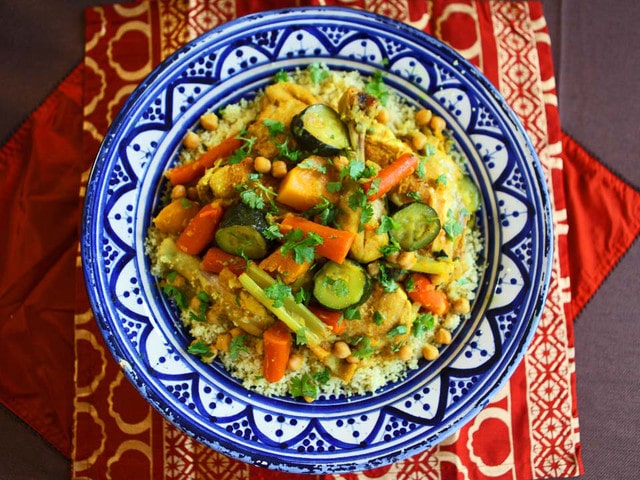
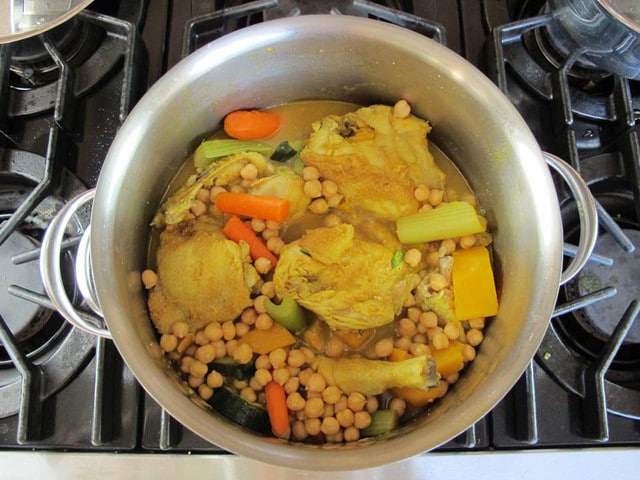
Chicken and vegetables couscous


  • 3 tbsp extra virgin olive oil divided
  • 1 whole chicken 3-4 pounds, cut into pieces
  • 2 whole onions peeled and sliced
  • 2 tsp minced fresh garlic
  • 3 1/2 cups low sodium chicken broth divided
  • 2 tsp salt divided
  • 1 tsp turmeric heaping
  • 1/2 tsp cumin
  • 1/4 tsp cayenne pepper
  • 1/4 tsp black pepper
  • 1 lb butternut squash, peeled, cubed and seeded about 3/4 lb. peeled butternut squash cubes
  • 3/4 lb zucchini about 2 medium, cut into 1-inch pieces
  • 3/4 lb carrots peeled and cut into 2-inch pieces
  • 2 celery ribs cut into 2-inch pieces
  • 1 3/4 cups cooked chickpeas 1 can
  • 10 oz instant couscous 1 box
  • 1 tbsp fresh chopped cilantro or parsley
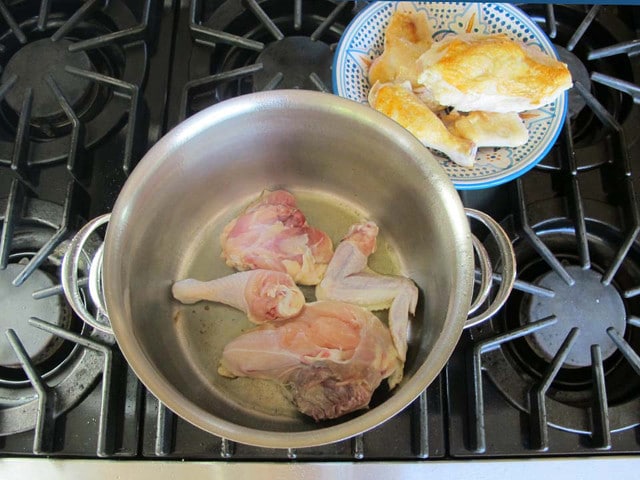
1. Heat 2 tbsp olive oil in a large 8 quart pot over high heat until it just begins to smoke. Place half of the chicken pieces skin side down and brown them for a few minutes. Remove the chicken pieces and brown the other chicken pieces in the same way. Remove the chicken from the pot and set aside.


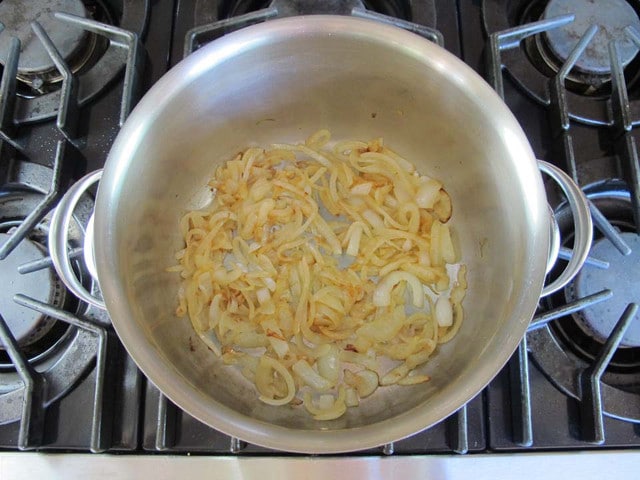
2. Reduce heat to medium and add sliced onions to the pot. Saute the onions, stirring frequently, until the onions soften and begin to caramelize. Add the garlic and saute for a minute more until fragrant.


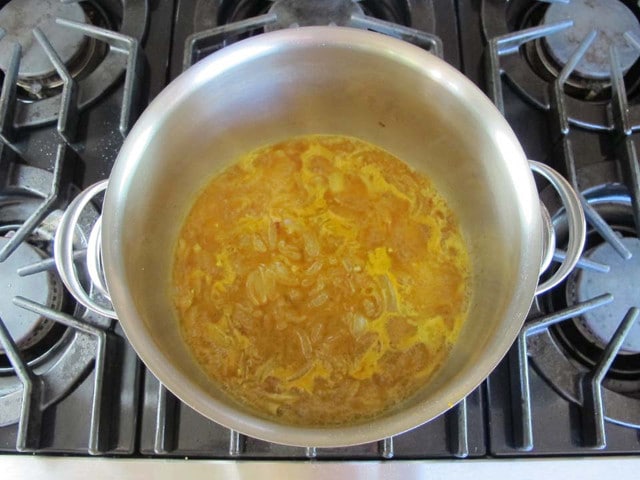
3. Add 1 1/2 cups low sodium chicken broth to the pot. Stir in 1 1/2 tsp salt, 1 tsp turmeric, 1/2 tsp cumin, 1/4 tsp cayenne and 1/4 tsp black pepper. Scrape any brown bits from the bottom of the pan as you bring the stock to a boil.


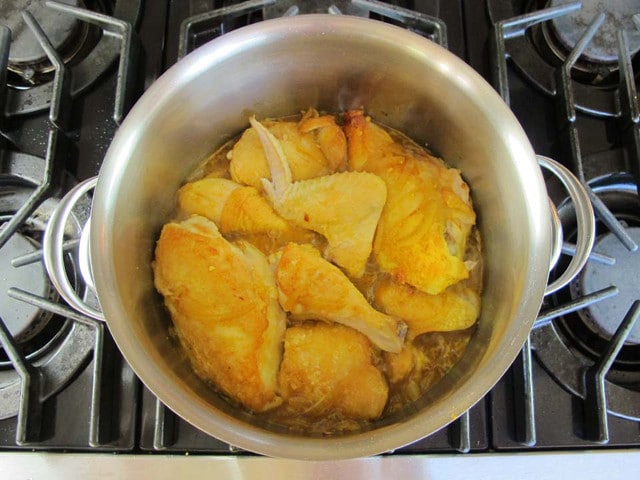
4. Add the chicken pieces to the pot, using a pair of tongs to coat them with sauce before placing them skin-side up. Reduce heat to a low simmer and cover the pot, vented slightly. Let them simmer on low heat for 45 minutes.


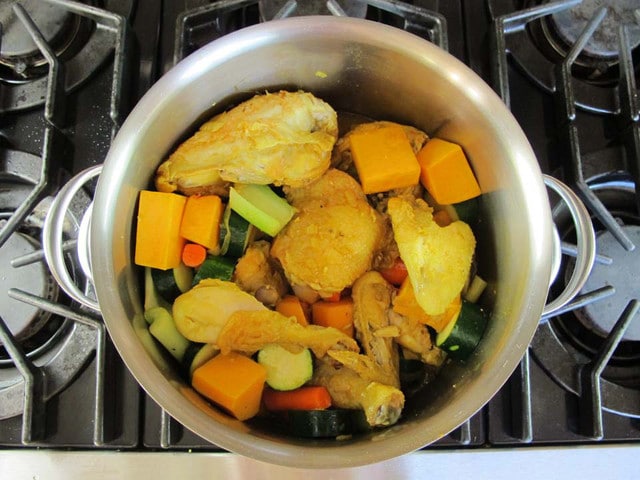
5. Remove chicken pieces from the pot and add the squash, zucchini, carrots and celery, stirring them into the broth to make sure each vegetable is evenly coated. Bring to a boil. Add the chicken pieces back to the pot on top of the vegetables. Cover the pot tightly and reduce heat to a low simmer. Let the vegetables cook for 15 minutes.


6. Gently stir the chickpeas into the chicken vegetable mixture. Let the mixture cook covered for 5-10 more minutes until the largest vegetable chunks are tender.


7.  While the chicken mixture finishes cooking, prepare the couscous. In a small pot, bring 2 cups low sodium chicken broth to a boil. Stir in 1/2 tsp salt, pinch of turmeric and 1 tbsp olive oil.
Stir in the couscous and cover the pot. Remove the pot from heat and let the couscous steam for 5 minutes, until tender.


8. Fluff the cooked couscous with a fork and place it on a serving platter. Use a slotted spoon to place the cooked chicken and vegetables on top of the couscous, then sprinkle with chopped cilantro or parsley. Pour the cooking liquid into a large gravy boat.
Top each serving of couscous with a bit of cooking liquid to moisten. Can be served with spicy sauce or harissa on the side.


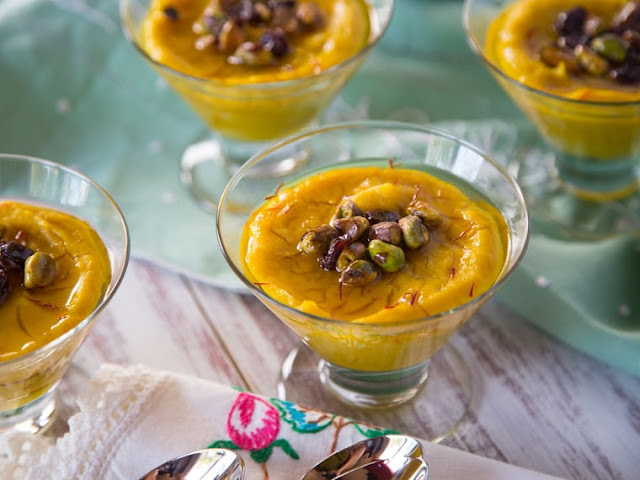
                Persian Saffron Pudding


                Pudding Ingredients
                • 3 cups unsweetened coconut milk
                • 1 1/4 cups water divided
                • 1/2 cup sugar
                • 3/4 cup brown rice flour
                • 1 whole cinnamon stick
                • 1 whole star anise
                • 12 whole green cardamom pods
                • 1/2 tsp saffron use a good quality, expensive saffron; Iranian or Spanish is best. The cheap stuff has no flavor!
                • 1/2 tsp turmeric
                • 3/4 tsp salt


                For the Orange Blossom Sauce

                • 1/2 cup sugar
                • 3 tbsp water
                • 2 tbsp orange blossom water
                • Shelled pistachios, garnish
                • Black or golden raisins, garnish
                • Saffron threads, optional garnish (same note as above)

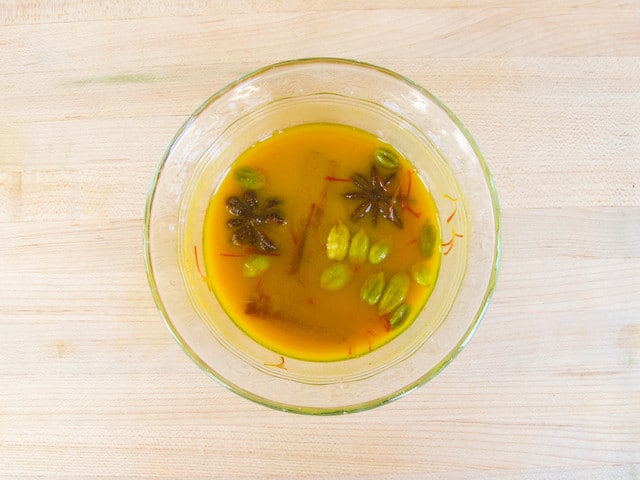
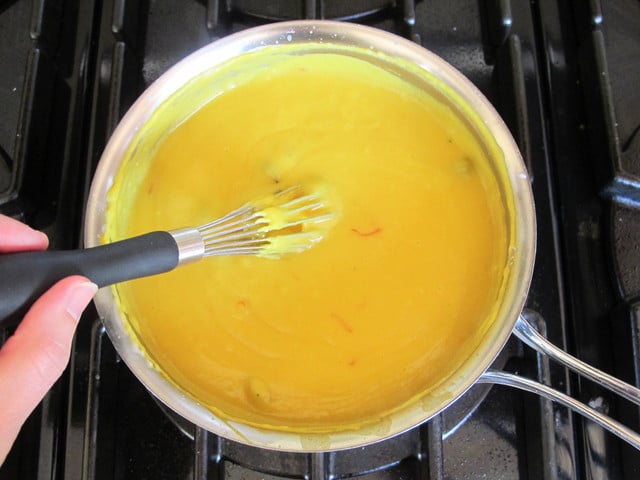
                1. To make the pudding: In a small dish, combine the cinnamon stick, star anise, cardamom pods, saffron and turmeric and cover with 1/4 cup hot water to bloom the spices. 


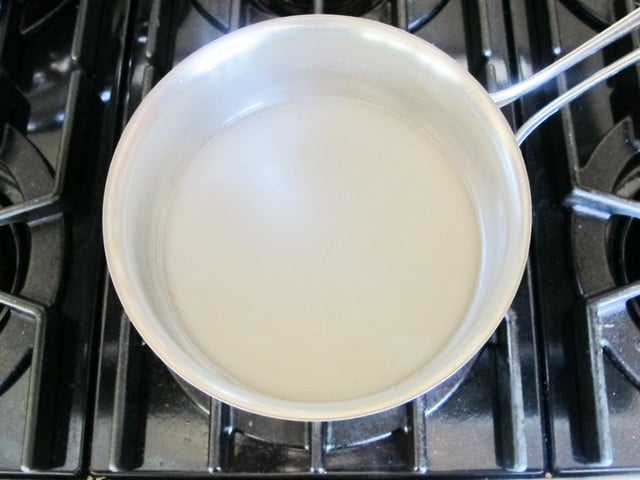
                2. In a medium saucepan combine coconut milk, water, sugar and salt. Bring to a boil, then reduce to a simmer and slowly whisk in the rice flour until smooth.


                3. Add the dish of spices and stir until thoroughly combined. Cook for 15-20 minutes, stirring frequently.


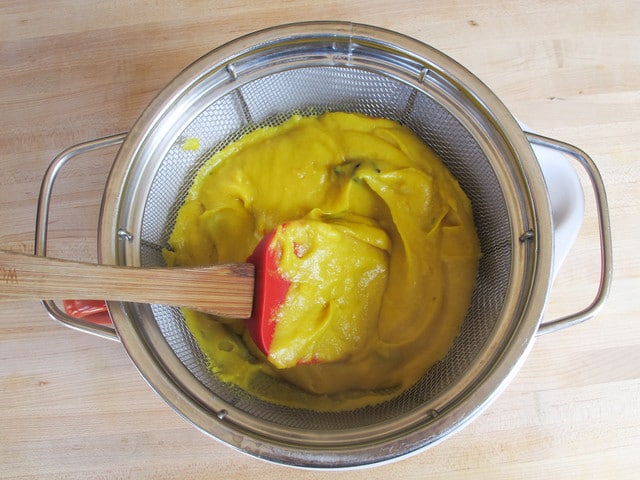
                4. Remove from heat and transfer to a mesh strainer set over a large mixing bowl. Push through with a spoon or spatula to remove any whole spices.


                • Divide pudding evenly between 4-6 dishes and refrigerate to cool before serving.
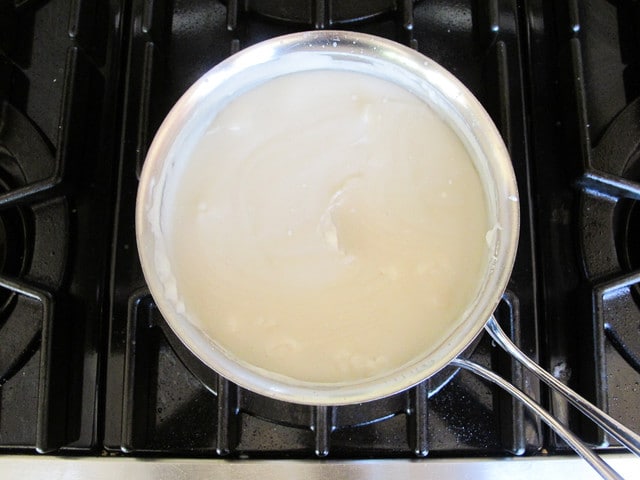
                5. To make orange blossom syrup: Combine all ingredients in a small saucepan and bring to a boil over medium heat. Remove from heat and allow to cool. The syrup will thicken upon standing.


                6. To assemble, top the pudding with a few pistachios and raisins, then drizzle with the orange blossom syrup. If you're feeling extra fancy you can also garnish with a few saffron threads.


                Basic Moroccan Paprika fish

                 This Fish is flavorful, healthy, and couldn’t be easier to make. Slowly steamed with aromatic herbs and spices, then drizzled in a rich red paprika sauce, it’s an impressive dish that requires very little effort. Whether you’re cooking an easy weeknight dinner or a special holiday meal, you can’t go wrong with this recipe.


                • 4 fillets white fish, 8 ounces each (best if you use a firm, dense fish like halibut, sea bass or snapper)
                • 1 bunch fresh cilantro, cut into large pieces (you can substitute fresh parsley or basil if you prefer)
                • 1 red bell pepper, seeded and cut into long thin strips
                • 5 large garlic cloves, coarsely chopped
                • 3 large dried red chili peppers
                • 1/4 tsp turmeric
                • 1 1/2 cups water
                • 1/3 cup extra virgin olive oil
                • 1 tbsp paprika (heaping)
                • Salt and pepper to taste
                  (Optional ingredients: Lemon, Olives, capers, shrimp etc)

                 For this recipe, you will need a sauté pan, it’s like a wide, deep skillet with higher sides. Before you start cooking, reserve a few pieces of the cilantro for garnish.


                1. Place cilantro, bell pepper slices, garlic and chili peppers in the bottom of the pan to create a “bed” for the fish.
                Place fish fillets on top of the other ingredients. Season fillets generously with salt and pepper, then sprinkle turmeric evenly across fillets.


                1. Place cilantro, bell pepper slices, garlic and chili peppers in the bottom of the pan to create a “bed” for the fish.
                2. Place fish fillets on top of the other ingredients. Season fillets generously with salt and pepper, then sprinkle turmeric evenly across fillets.
                 2. Add 1 ½ cups of water to the pan. Cover pan, turn flame on high, and bring to a boil. As soon as the water boils, reduce heat to medium and uncover the pan. Mixture should be simmering lightly at this point. Allow mixture to simmer uncovered for 10-15 minutes, basting fillets periodically, until the water reduces by half and turns yellow.


                3. In a small bowl, mix together olive oil and paprika with a fork. Pour red oil mixture over the fish fillets, coating them evenly. Let the fish simmer uncovered for 20 minutes more, basting frequently. Fish is done when liquid is reduced to about a quarter of what it was originally, and the fish has turned a rich red color.


                4. Serve fish and bell peppers together with the grain and/or vegetable of your choice. Garnish with fresh cilantro leaves.


                1.23.2022

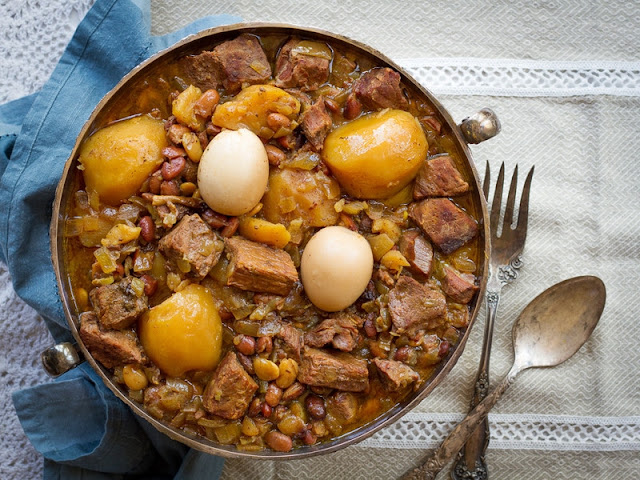
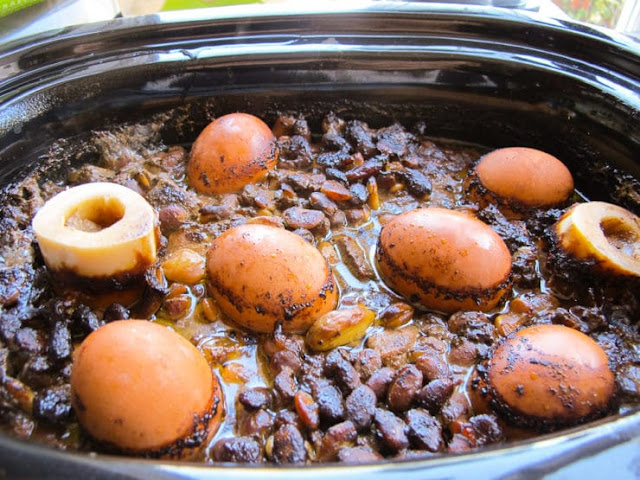
                Cholent - a Jewish Sabbath-day dish of slow-baked meat and vegetables.

                 Since Biblical times the Jewish people have scattered and settled all over the globe, adapting their foods to suit the regions where they’ve settled. Over the centuries countless regional ethnic dishes have been made kosher to fit the Jewish religious standards for pure eating. This means that “Jewish food” is really world cuisine; there are very few dishes that are uniquely Jewish. Bagels? A Polish baked bread originally created for Lent and later embraced by the Jews. Gefilte fish? A German dish adopted by Yiddish cooks. But cholent– well, cholent is one of the few foods that is totally and completely Jewish.


                Cholent is uniquely Jewish. It was created because Jewish law does not permit cooking on Shabbat. To adhere to this God prohibition, Jewish cooks began to create meat and bean stews in heavy pots that would slowly simmer inside a low-heat oven overnight. They would prepare the stew on Friday before sundown, cook it partially, and place it into the oven to continue cooking throughout the night. That way, there would be no need to kindle a fire or light a stove during the hours of Shabbat; they would simple remove the stew from the oven at mealtime and it would be fully cooked and ready to serve.

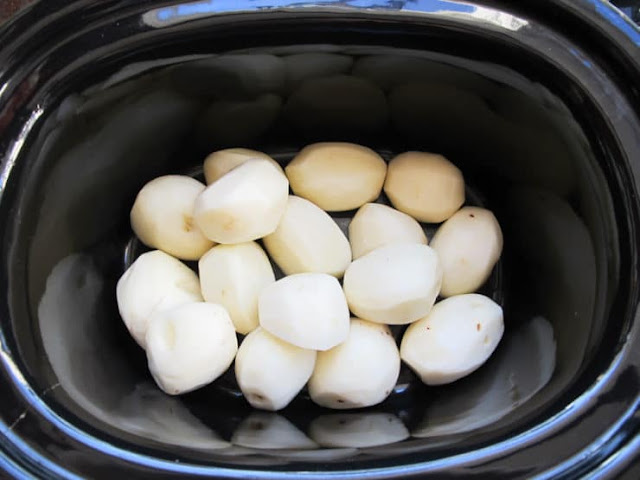
                • 2 lbs (1kg) large red potatoes, peeled and halved 
                • 2 whole onions, chopped
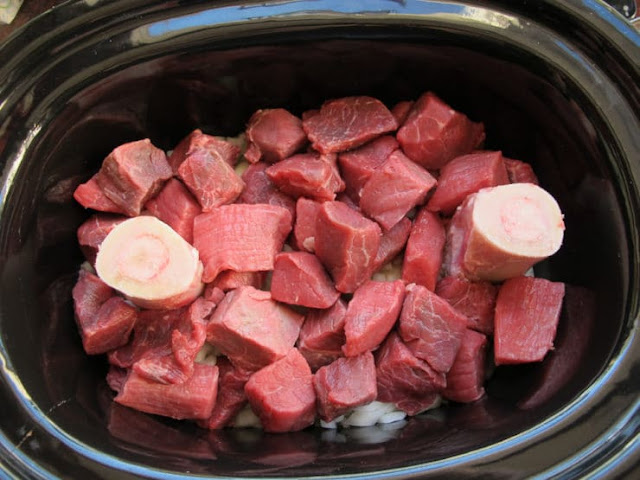
                • 2 lbs (1Kg) beef stew meat or brisket, cut into chunks 
                • 2 marrow bones
                • 1 cup dried beans - lima, pinto, chickpeas, red beans (not kidney), or a mixture
                • 1/2 cup pearl barley or coarse-grain kasha 
                • 3 whole garlic cloves
                • 6 eggs 
                • 1/2 tsp black pepper (if spice sensitive use 1/4 tsp)
                • 1 quart chicken broth
                • 1 tbsp salt
                • 1 1/2 tsp paprika
                • 1 1/2 tsp turmeric
                • 1 tsp cumin
                • 1/4 tsp cayenne (if spice sensitive use just a pinch)
                • Water (varies)

                1. In a large slow cooker (the larger the better!), place the potatoes in a single layer on the bottom of the cooking vessel.


                2. Sprinkle the onions over the potatoes.


                3. Place the beef in a single layer on top of the onions and potatoes. Place the two marrow bones in the meat. 


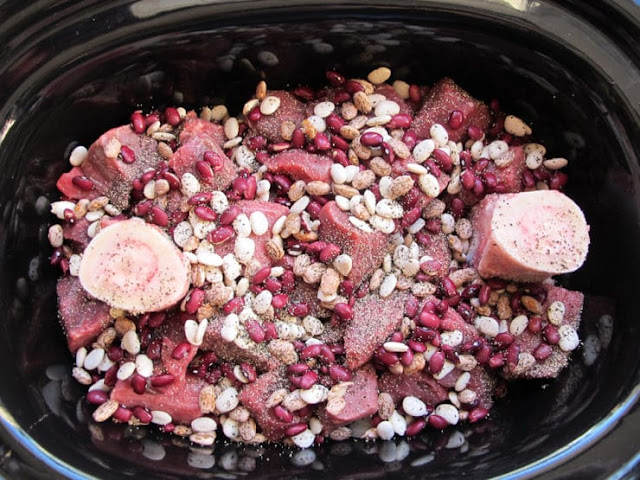
                4. Rinse the beans clean, checking for any stones or impurities. If using barley or kasha, do the same with the grains. Sprinkle the beans (raw or pre-soaked) and optional grains over the top of the meat. Place the three whole garlic cloves into the meat, evenly spaced. Sprinkle the whole mixture with the black pepper. Add the eggs, rinse them well and then tuck them into the meat. 


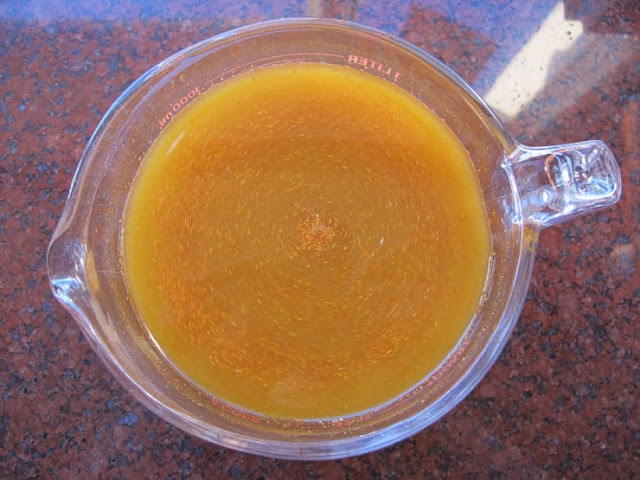
                5. In a 4-cup container, whisk together the low sodium chicken broth, kosher salt, paprika, turmeric, cumin and cayenne.


                6. Pour the liquid over the cholent. Add additional water until all of the beans and pieces of meat are covered. For us, it's usually another 1-2 cups of water in our slow cooker-- it will vary; I usually add a bit more liquid if using grains, because they will soak it up.


                7. Cover the slow cooker. Cook on low heat for 16 hours. Check occasionally as it's cooking; add additional water and stir a bit if it's looking too dry. Most cookers will auto-switch to warm when the cooking is complete. If yours doesn’t, set it to warm until ready to serve.


                8. It will look a bit strange when it's done cooking! Don't worry, just dig in and you'll see that it's perfectly cooked below the surface. Peel the eggs before serving the cholent.


                To cook this recipe in the oven, layer the ingredients in a large heavy 7-8 quart Dutch oven. Make sure you have enough liquid to just cover all ingredients. Cover with lid and cook cholent at 200 degrees F for 12-16 hours.


                Shakshuka

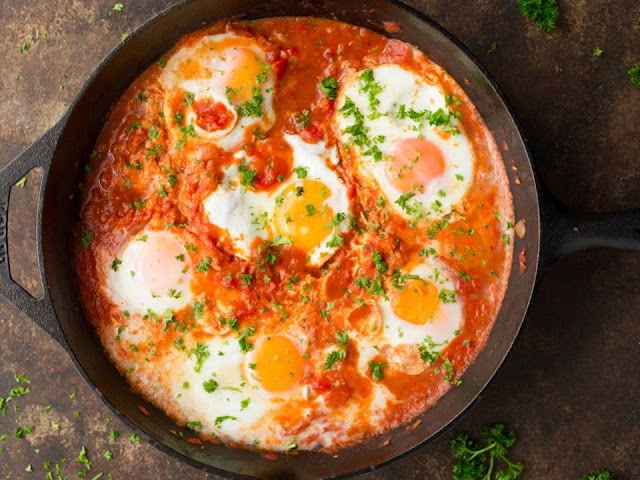
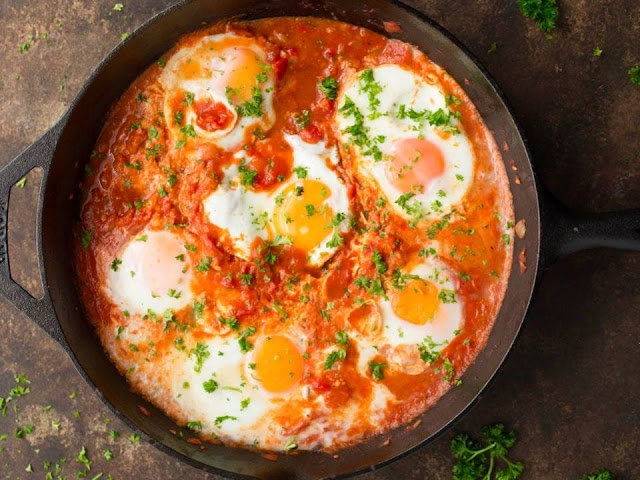
                If you are not familiar with shakshuka, I am excited to introduce the concept to you! The word shakshuka, rooted in Arabic means shaken together or mixed, which is the perfect way to describe this dynamic mixture of flavors and endless options for combinations. You’ll find variations of eggs shakshuka all over the Middle East in Palestine, Israel, Egypt and many other places. This easy and healthy egg dish is vegetarian, gluten free, and incredibly delicious. 


                The concept is very simple. A dish of eggs soft cooked atop a bed of thick reduced spicy tomato sauce with peppers. In the maghreb, this chunky sauce is known as matbucha. Similar preparations are made throughout the world, including a popular Italian dish known as “eggs in purgatory.” Shakshuka is somewhat different than the Italian dish; it’s generally spicier, and has the addition of peppers.

                Shakshuka is also very popular in Israel, where it is often eaten for breakfast. 

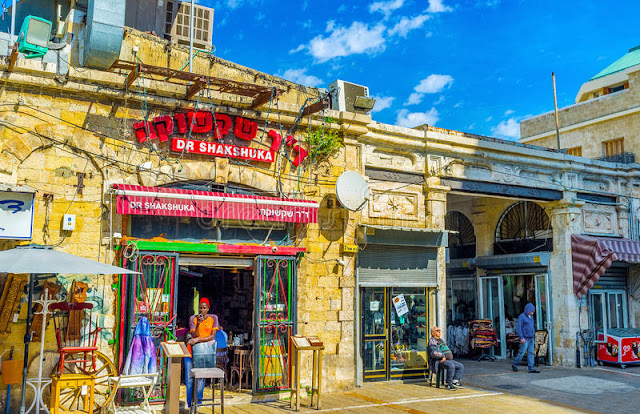
                In Tel Aviv, the most famous place to eat shakshuka is a restaurant known as Dr. Shakshuka.
                The charm of Dr. Shakshuka is evident from the moment you enter. The restaurant is housed in an aging building in the old port city of Jaffa. It’s buzzing all day long with local patrons as well as tourists, everybody eager to taste the “Tripolitanian”-style cooking. The owner Bino Gabso was born to a Libyan family that immigrated to Israel in 1949. 
                If you’re looking for variations on flavor, different ingredients can be added to the tomato base—jalapeños, green chilies, parsley, red pepper flakes, smoked paprika, additional vegetables or anything else that sounds tasty to you. I’ve even made it with a spinach/tomato base that turned out great.  Use your imagination!

                Shaksuka

                1 tablespoon olive oil
                1/2 onion, peeled and diced
                1 clove garlic, minced
                1 red bell pepper, seeded and chopped
                4 cups ripe diced tomatoes, or 2 cans (14 oz. each) diced tomatoes
                2 tablespoon tomato paste
                1 teaspoon mild chili powder
                1 teaspoon ground cumin
                1 teaspoon paprika
                Pinch of cayenne pepper, or more to taste (careful, it's spicy!)
                Pinch of sugar (optional, to taste - omit for low carb)
                kosher salt and pepper, to taste
                6 large eggs
                1/2 tablespoon fresh chopped parsley or cilantro (optional, for garnish)


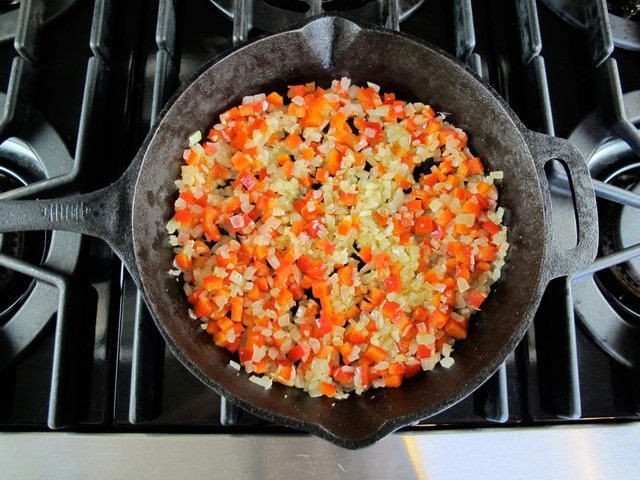
                1. Heat a deep, large skillet or sauté pan on medium. Slowly warm olive oil in the pan. Add chopped onion, sauté for a few minutes until the onion begins to soften. Add garlic and continue to sauté till mixture is fragrant.   


                2. Add the diced bell pepper, sauté for 5-7 minutes over medium until softened.


                3. Add tomatoes and tomato paste to pan, stir until blended. Add spices and sugar, stir, and allow mixture to simmer over medium heat for 5-7 minutes until it starts to reduce. 
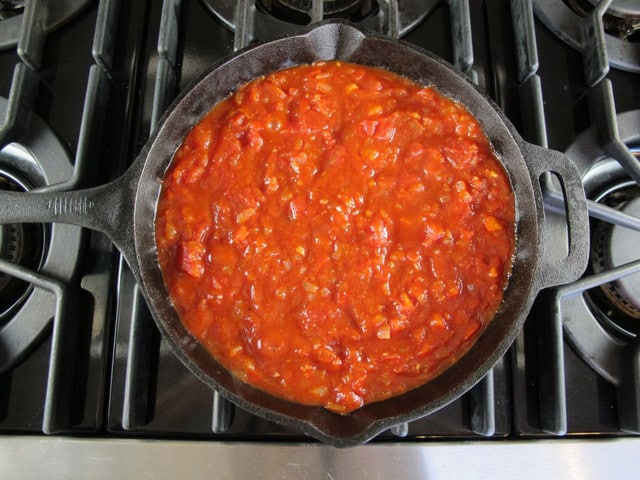


                4. At this point, you can taste the mixture and spice it according to your preferences. Add salt and pepper to taste, more sugar for a sweeter sauce, or more cayenne pepper for a spicier shakshuka (be careful with the cayenne... it is extremely spicy!

                5. Crack the eggs, one at a time, directly over the tomato mixture, making sure to space them evenly over the sauce. I usually place 5 eggs around the outer edge and 1 in the center. The eggs will cook "over easy" style on top of the tomato sauce.
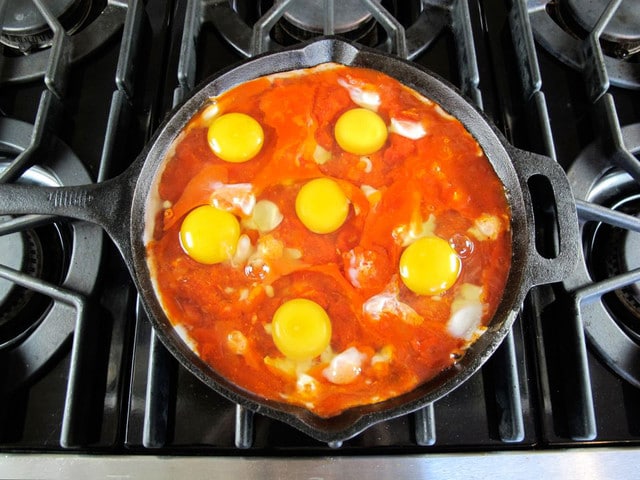


                6. Cover the pan with a lid. Allow mixture to simmer for 10-15 minutes, or until the eggs are cooked and the sauce has slightly reduced. Keep an eye on the skillet to make sure that the sauce doesn't reduce too much, which can lead to burning.
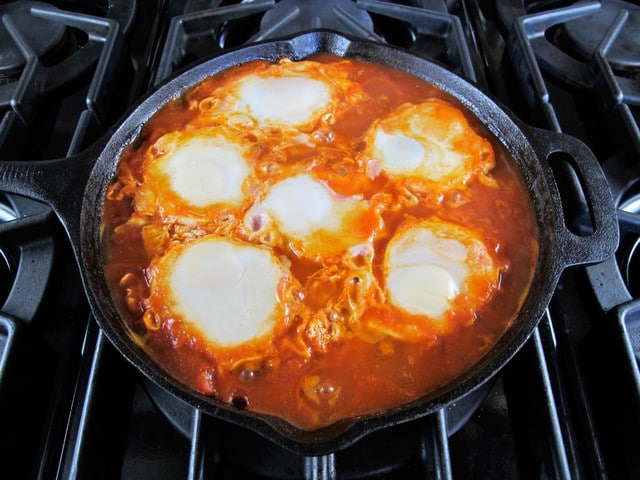

                7. Some people prefer their shakshuka with more runny yolks. If this is your preference, let the sauce reduce for a few minutes before cracking the eggs on top-- then, cover the pan and cook the eggs to taste, making sure the egg whites are set before serving. Garnish with the chopped parsley or cilantro, if desired. A sprinkle of feta cheese on top is also nice!