1.23.2022

Passover Eastern European Jewish Brisket


Jews living in Eastern Europe rarely had the money to buy better cuts of meat. They learned to cook with cheaper cuts, like brisket, often overlooked for its toughness. Cooking the brisket low and slow breaks it down, resulting in a tender piece of meat.

This Jewish tradition continues today, and brisket is often served for special holidays and occasions. On Shabbat, it is added to a pot with vegetables and potatoes to make a slow-cooked meaty stew known as cholent. At Rosh Hashanah, it is added to root vegetables with sweet dried fruits and slow cooked into tzimmes. This is the basic recipe, from here you can personalize according to your taste.

  • 5-7 lbs (3kg) brisket, first or second cut (do not trim fat - especially if it's grass fed)
  • 1/4 cup extra virgin olive oil, divided
  • 2 large brown onions, peeled and sliced
  • 1 lb (500g) carrots, peeled and sliced
  • 1 lb (500g) celery, peeled and sliced
  • 28 oz (700g) tomatoes - whole, diced, or crushed (1 large can)
  • 10 peeled whole garlic cloves
  • 1/2 cup brown sugar
  • 1/4 cup apple cider vinegar 
  • 2 cups beef or chicken broth, divided
  • Salt and pepper
    (Optional Ingredients: Raisins, dried fruits, potatoes, turnips, 1 tbsp honey, 1 chopped apple and cinnamon.

    1. Preheat oven to 300 degrees F. Rinse the brisket and pat dry. Rub both sides of the meat with black pepper and salt.


    2. Heat a large skillet over a medium flame on the stovetop. Drizzle 2 tbsp of olive oil into the pan. Brown the brisket on both sides—it will take 4-5 minutes per side. A large brisket may overlap the edges of the skillet; you can brown it in stages, letting half the brisket overlap the edge, then adjusting it to brown the other half.

3. While brisket is browning, pour canned tomatoes, garlic, brown sugar, apple cider vinegar, and 1 ½ cups broth into a blender or food processor. Add 2 tsp of salt and ¼ tsp of black pepper. Pulse till garlic is chopped small and all ingredients are combined.


4. Remove the browned brisket from the skillet. Drizzle 2 tbsp more olive oil in the pan and add the sliced onions. Saute them over medium high for a few minutes until they begin to soften and shrink in size.


5. Add the carrot and celery slices. Sauté for another 5-6 minutes until the onions are soft and browning and the vegetables are fragrant.


6. Pour the vegetables out of the skillet and onto a plate, reserve. Add 1/2 cup beef stock or chicken stock into the skillet and let it heat up. Use a spatula to gently scrape up any brown bits and pan juices that are clinging to the skillet. Turn off heat.


7. Pour half of the tomato mixture into a large roasting pan.


8. Place brisket on top of the tomato sauce, fat cap facing up.


9. Pour the sauteed vegetables across the top of the brisket, along with the broth and brown bits.


10. Pour the remaining tomato sauce over the top of the vegetables and brisket.


11. Cover the roasting pan tightly with a layer of parchment paper followed by a layer of foil. The parchment forms a protective layer between the meat and sauce (which is acidic) and the foil.


12. Place brisket in the oven. Let it roast undisturbed for 5 to 7 hours. It will take about 1 hour per pound of meat (leaner cuts of meat like grass fed may take longer—test for doneness). Brisket is ready when it flakes tenderly when pierced with a fork. You can let it cook even longer for a soft, shredded texture if that’s what you prefer. When fully cooked, the brisket will have shrunk in size. I recommend making this brisket ahead; allowing it to sit in the refrigerator for 1-2 nights will improve the flavor. If you would like to do this, skip ahead to where it says “Make Ahead Directions.” If you are not making ahead, continue reading.


13. Remove brisket from the pan and let it rest on the cutting board fat-side up for 20-30 minutes. Meanwhile, pour the sauce and vegetables from the roasting pan into a smaller saucepan. Skim fat from the surface of the cooking sauce, then reheat the sauce till hot (not boiling).


14. Cut fat cap off the brisket, then cut the brisket in thin slices against the grain. Serve topped with hot tomato sauce and softened veggies.


Make Ahead Directions: 

15. Open the foil to vent and let the brisket slowly return to room temperature. Switch the brisket and sauce to a ceramic or glass dish (metal from the roasting pan can react with the acid in the sauce, which can cause an off taste if left to sit). Cover with plastic wrap and place in the refrigerator. Let the brisket chill overnight, or up to two days. You can also freeze the brisket if you prefer.
1-2 hours before serving, remove the brisket from the refrigerator and preheat your oven to 350 degrees F. The fat in the sauce will have risen to the top, turned white, and solidified. Use a spoon to scoop the fat bits out of the sauce and discard.


16. Take the brisket out of the dish and brush any excess sauce back into the dish. Place brisket on a cutting board, fat-side up. Slice the meat cold—first cut the fat cap off the brisket, then cut the brisket in thin slices against the grain.

17. Return the sliced meat to the dish and spoon sauce over it, making sure to spoon a little sauce between each slice. Cover the dish with a layer of parchment paper, then with foil, and place it in the oven.


18. Let the brisket roast for 45-60 minutes until heated through. You can cook the brisket even longer to let it become more tender, if you wish. Serve with hot sauce and softened veggies. If you prefer, you can use a slow cooker to reheat. Set the slow cooker to high heat and cook until heated through, about 1 hour.




1.19.2022

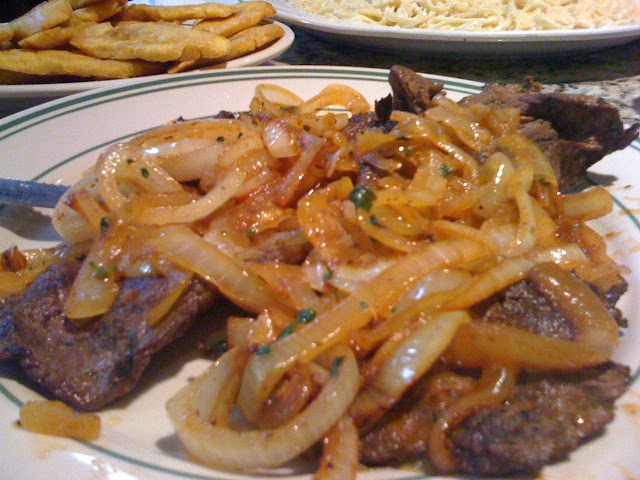
Onion and garlic beef tenderloin


  • 1 lb beef tenderloin
  • 3 onions (sliced like rings)
  • 3 garlic cloves, chopped 
  • 1/2 cup red wine
  • 2 tbsp Butter
  • Fresh Parsley
  • Salt and pepper to taste

1. Cut the tenderloin in bite pieces. 

2. Season with salt, and pepper.

3. Heat a large, heavy-bottomed frying pan over high heat. Place the meat with 1 tbsp butter in the pan (single layer) and let cook undisturbed for about 2-4 minutes. Flip the meat using tongs or a spatula and cook for additional 2-4 minutes. Transfer the meat to a plate.

4. In the same pan where meat were just cooked, heat 1 tablespoon of butter over medium heat and combine the onion rings and garlic. Cook for about 5 minutes (season with a pinch of salt after cooking for an initial 2-3 minutes), stirring constantly. Place meat on top of the onions and let cook undisturbed on medium heat for about 1 minute drizzleling the wine. This helps the onions to absorb the rich meat flavor. Mix all together and serve.


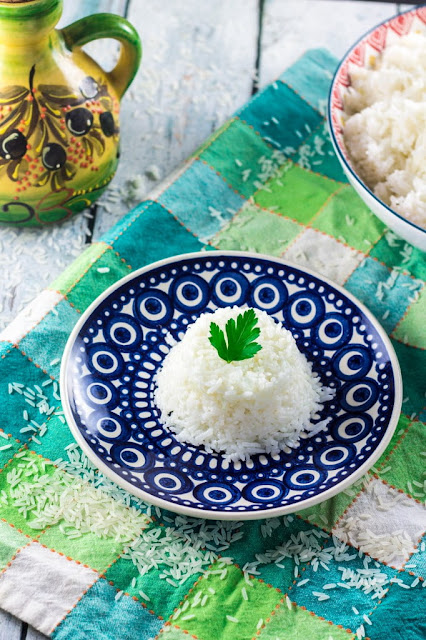
Basic white rice (Brazilian Style)


  •  - 1/4 cup vegetable oil or olive oil
  •  - 1 cup white (long grain) rice (basmati or jasmine for example), washed
  •  - 2 cups water
  •  - 1 medium onion, finely chopped
     -  2 bay leafs
  •  - 3 cloves of garlic, minced
  •  - Pinch of salt

  • 1. Put the water to boil in a tea kettle.

  • 2. In a large pot, heat the vegetable oil over medium high heat.

  • 3. Add the onion and garlic and sauté until translucent. Then add the bayleaf.

  • 4. Add the raw washed rice and cook, stirring occasionally so it doesn't burn, until it starts forming clumps.

  • 5. Add the boiling water and the salt, cover and lower the heat to the lowest setting.

  • 6. Cook for 20 minutes or until there's no more water in the bottom. (You will see some holes forming in the surface and you won't hear any more water!)

  • 7. Turn the heat off and lift the cover slightly.
  •  Let the rice sit untouched for 5 more minutes.
  • Fluff the rice with a fork and serve.

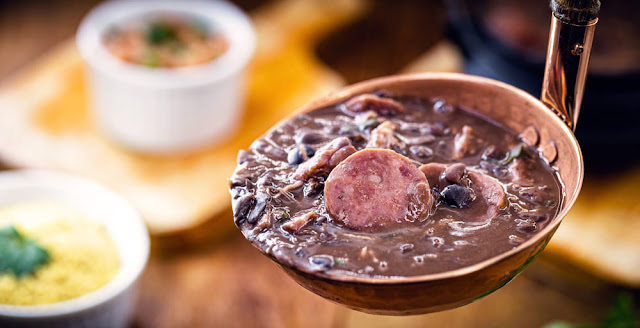
Black beans Brazilian Style


  • 1 lbs (500g) Black Beans (If using canned beans 1 1/2 lbs (750g)
  • 7 large cloves garlic, sliced
  • 1 bouillon cube of beef
  • 2 bay leaf
  • 360g smoked bacon lardons
  • 12 oz (340g) smoked kielbasa sausage (optional)
  • Cilantro or parsley to taste

    (READ NOTES BEFORE STARTING IT)

1 - Wash the beans and let it soak on a bowl full of water for at least five hours. 

2 - Then put the beans, bayleaf, bouillon and sliced sausages (if using it) in a pressure cooker with a layer of water to cover them and an extra 3/4 inch of water above the layer of beans. You can use an Instant Pot for this. Cook for 40 minutes until the beans are cooked. (Instant pot setting is high pressure for 40 minutes).

3- In the meantime, fry the lardons until cooked, and set aside. Then fry the garlic in the bacon fat and set aside.

4 - When the beans are cooked, add the garlic and bacon and stir well as you bring to the boil over medium heat. Boil for 5 minutes before serving. Season with salt to taste before serving (here the lardons were quite salty and no salt was needed.)


    Notes

    If you don't have a pressure cooker or an Instant pot dont worry. You can also cook the beans on a regular pan. It will take two hours. There is also the very easy way to do it. Simply buy black beans already cooked on the can and use them insted. The flavour will come good as well!

    This recipe serves five.

    Serve the beans with white rice. Optionally, garnish with farofa (toasted manioc flour) and some hot sauce like Tabasco.

    Or you may want to serve it up as a side dish with some chicken or steak (picanha).


Caipirinha


- 1/2 lime, quartered
- 2 teaspoon white sugar
- 2 1/2 (75ml) fluid Oz Cachaça
- 1 cup crushed ice

In a large rocks glass squeeze and drop in 2 eighths of lime. Add sugar, crush and mix with a spoon. Pour in the cachaca and plenty of ice. Stir well.

1.18.2022

Brazilian carrot cake

Brazilian Carrot Cake, know as Bolo de Cenoura, is one of my favorite desserts and one of the most popular and traditional in Brazil. It is unlike any regular carrot cake you have seen before in Europe or USA, if you have not tried it and is truly a unique carrot dessert. It is rich in flavor and texture and is perfectly coated with a delicious signature chocolate sauce. Here is a simple and easy way to make this traditional Brazilian carrot cake dessert without all the fuss.


Ingredients for Brazilian carrot cake:


For the carrot cake:
1/2 cup vegetable oil
3 carrots grated
4 eggs
2 cups sugar
2 1/2 cups flour
1 tablespoon baking powder
1 teaspoon vanilla
For the Sauce:
1 tablespoon butter
3 tablespoons cocoa powder or chocolate of your choice.
1 cup sugar
4 tablespoons milk
Directions for the Brazilian carrot cake:
1) On a blender beat the carrots, eggs and oil for one minute; add the sugar and continue beating for another minute.
2) Take the mixture out of the blender and place in a big bowl, incorporate the flour.
3) Incorporate the baking powder slowly.
4) Pour into a greased baking mold and bake in the oven at 180C/355F for 40 minutes.
5) Once done, take out of the oven and cover with the chocolate sauce.
For the Sauce:
1) Combine all ingredients in a saucepan, bring to the boil.
2) Once it reaches a syrup like consistency, it is ready.
3) Pour over the cake, serve and enjoy!

1.17.2022

Gazpacho (Spanish soup)


  • - 4 to 5 slices stale bread, crust removed
  • - Water
  • - 5 large ripe tomatoes, about 2 pounds
  • - ½ cucumber, peeled, chopped
  • - 1 celery stalk, chopped
  • - 1 green or red pepper, cored, seeded, roughly chopped
  • - 2 green onions, trimmed, roughly chopped, more for garnish
  • - 2 garlic cloves, peeled, roughly chopped
  • - Extra Virgin Olive Oil
  • - 2 tablespoon sherry vinegar
  • - Salt and pepper
  • - ½ teaspoon cumin
  • - ½ teaspoon cayenne pepper, optional if you like spicy
  • - Pinch sugar
  • - Small handful fresh mint leaves, torn or chopped

    1. Place the bread slices in a bowl with ½ cup of water. Let the bread soak while you work on the tomatoes. Squeeze the bread to ring out any water.

    2. Place the tomatoes in a large pot of boiling water for 40 seconds or so. With a slotted spoon, remove the tomatoes from the boiling water and let them cool for about a minute or so. When they are cool enough to handle, gently peel the skins off.

    3. In a large food processor or blender, place the tomatoes with the cucumbers, celery, bell peppers, green onions and garlic. Top with the soaked bread. Pour ½ cup extra virgin olive oil and the sherry vinegar. Run the processor for a few seconds then add the salt, pepper, cumin, cayenne pepper (optional) and a pinch of sugar; blend.

    4. Test the gazpacho and if it's too thick, add a little water and blend again until you reach the desired texture.

    5. Transfer to a glass container or large canning jars. Cover tightly and chill in refrigerator.

    6. When ready to serve, give the gazpacho a quick stir then transfer to serving bowls or small glasses. Top with olive oil and a garnish of fresh mint, cilantro and chopped green onions, if you like.


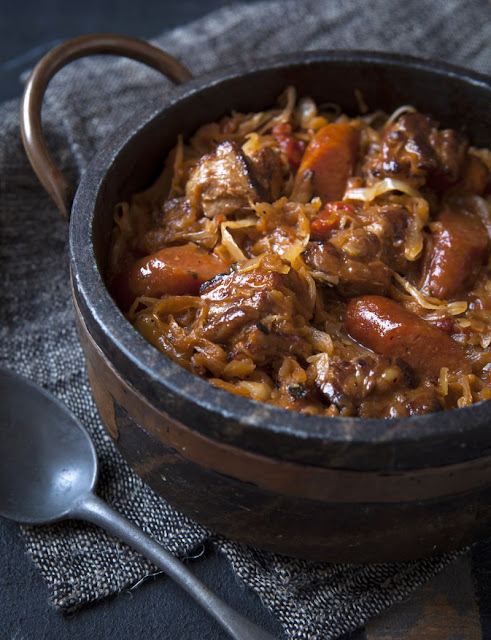
Bigos (National Polish Dish)


This is the national dish of Poland. It can be made with any kind of meat from pork to rabbit or venison, but should always have spicy Polish sausage. Like most stews this tastes better left overnight and reheated the next day making it a great dish to prepare in advance for an evening with friends.

50g/1¾oz butter

- 1 onion, sliced

- 1 tsp juniper berries, crushed

- ½ tsp caraway seeds

- 300g/10½oz lean pork belly, cubed

- 1 tbsp brown sugar

- 500g/1lb 2oz sauerkraut

- half a white cabbage, shredded

- 200g/7oz fresh chopped tomatoes or 400g tin tomatoes

- 500ml/18fl oz chicken or beef stock

- 10g/¼oz dried mushroom

- 300g/10½oz smoked Polish sausage, such as kabanas, chopped

- 1 apple, grated

- salt

1. Melt the butter in a large casserole. Add the onion and sauté over a medium heat until the onion is softened and translucent. Sprinkle over the juniper berries and caraway, then add the pork. Sprinkle over the brown sugar. Turn the heat up high for a couple of minutes, turning the meat so it browns well.

2. Drain the sauerkraut well and give it a rinse if you want to reduce the vinegar flavour. The easiest thing to do is squeeze it out with your hands. Add to the casserole with the white cabbage and chopped tomatoes, then pour over the stock. Simmer for about 30 minutes.

3. Soak the dried mushrooms in warm water. When they have softened, drain, adding their soaking liquor to the casserole. Chop the mushrooms finely and add these to the casserole, along with the sausage and apple.

4. Simmer for a further hour and a half and serve or cover overnight and reheat the following day.

Freshly ground black pepper


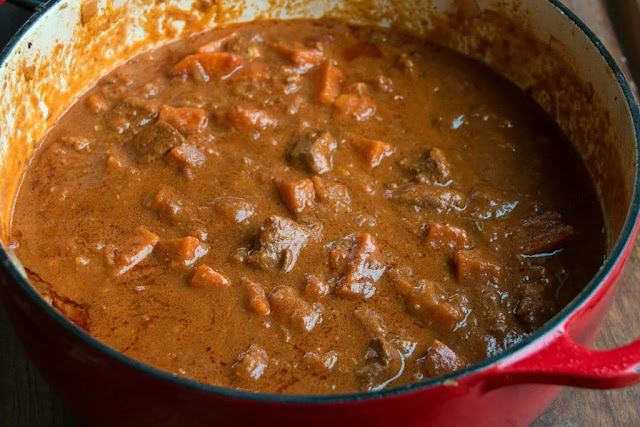
Senegalese Peanut Stew

Creamy and delicious peanut soup is very commonly eaten across West Africa with starchy food. It is easy to prepare with store cupboard staples and is very versatile.

Peanut soup is traditionally prepared with ground peanut, but this recipe uses peanut butter for convenience.


    • 2 lbs (1kg) chuck beef (see notes)
    • 1/2 cup peanut butter (see notes)
    • 1 red bell pepper
    • 2 carrots, cut on the size of the beef
    • 2 tbsp tomato paste or 3 fresh chopped tomatoes
    • 1 onion
    • 1 tbsp bouillon powder
    • 1 tsp cayenne pepper
    • 1/4 cup any vegetable oil (see notes)
    • 1 tsp salt to taste
    • 1 tsp black pepper
    • 1 cup water
    • 2 cups stock/broth

    Instructions

    • Cut the beef into small pieces.

    • Pour oil into a pan on medium heat.

    • Add beef, 1/2 tsp of black pepper, and a pinch of salt, and saute for 8-10 minutes.

    • Chop the onions and bell pepper.

    • Add onions and red bell pepper and saute for 3 minutes.

    • Add tomato paste and stir.

    • Cook for about 5 minutes.

    • Add water, stock, and bouillon, cayenne pepper and salt to taste.

    • Combine carrots and bring to a boil and cook for 15 more minutes.

    • Add peanut butter and stir till it is dissolved.

    • Let it cook till it thickens, roughly 2-5 minutes.

    • Serve with rice and enjoy!

    Notes

    This recipe serves 6 and contains 6 net carbs per serving.

    - You can substitute the beef for lamb, chicken or goat.

    - You can substitute the vegetable oil for coconut or palm tree oil. 

    - Usually in africa it is made with crunched peanuts. Using a food processor mix 1/2 cup of peanuts if you would like a more authenthic peanut stew.

  • - You can adjust the cayenne pepper to your desired preference. To increase the heat, add a whole habanero pepper after adding the stock.

  • - After adding the peanut butter, you can add a little water if the stew is too thickIf you use beef for your peanut stew, cut it into smaller pieces before sautéing, to cut down on your cooking time.